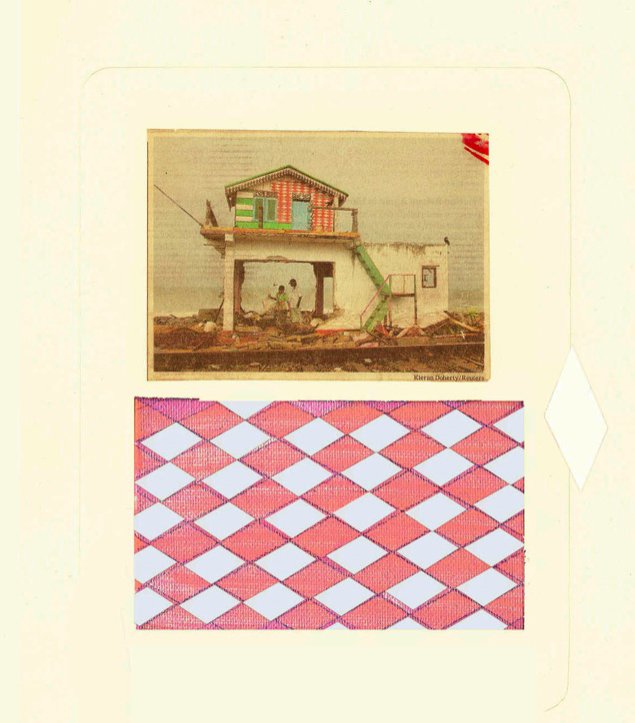
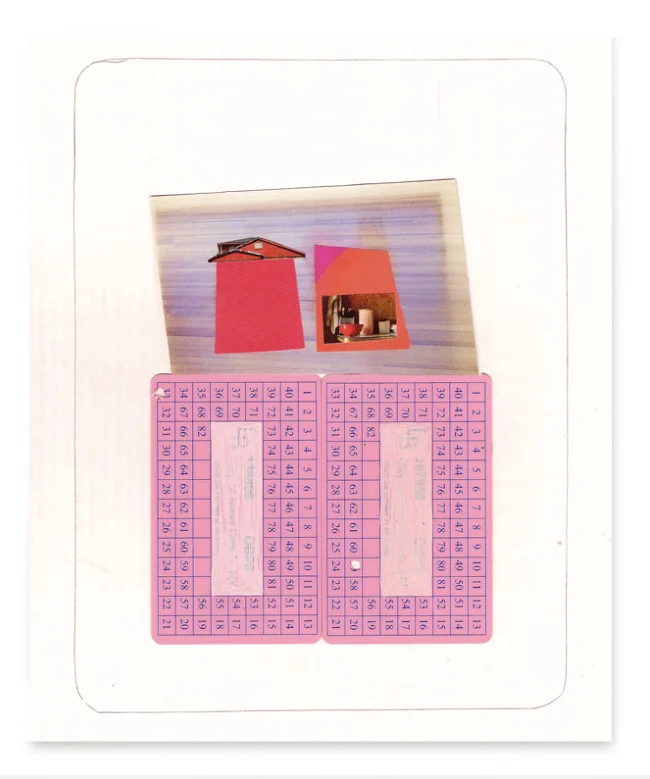
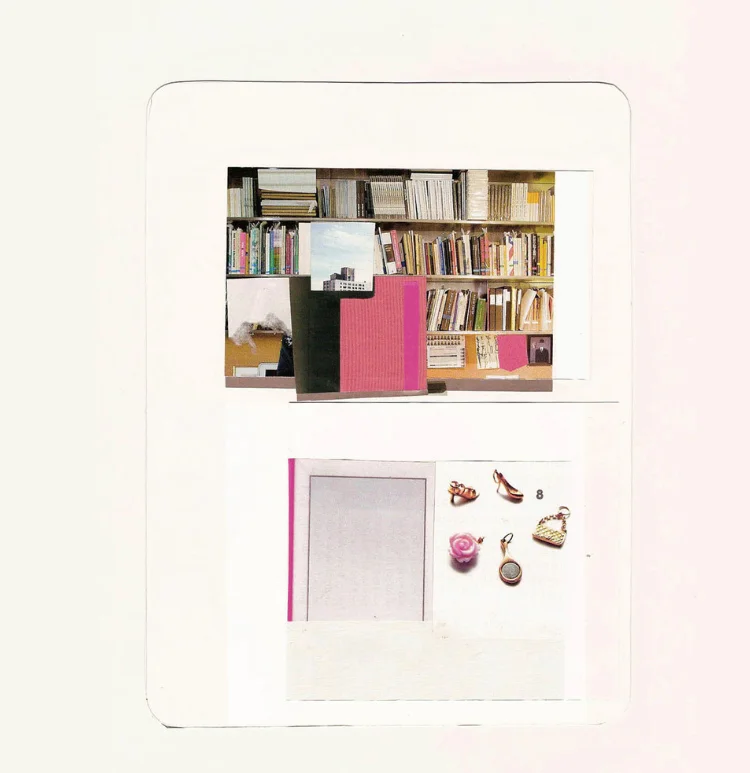
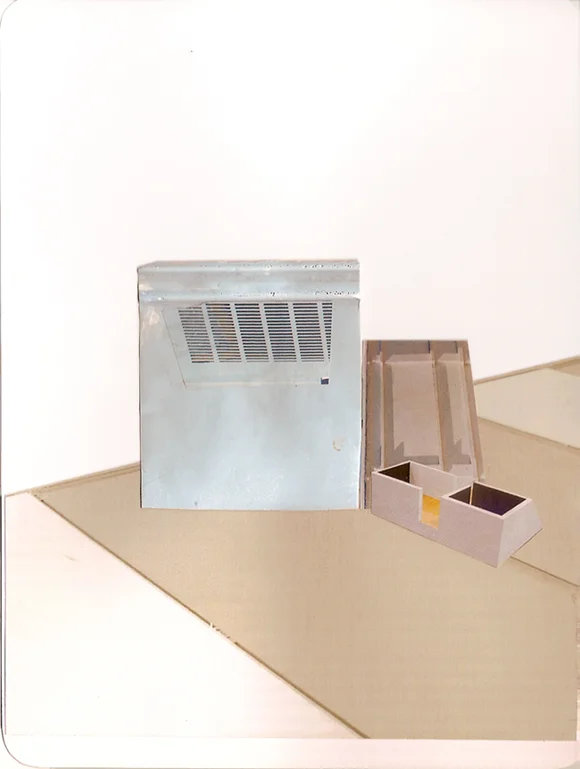
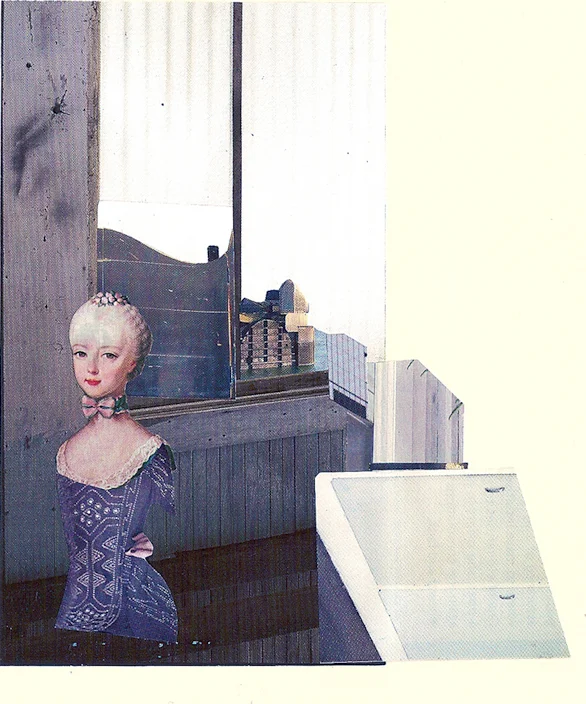
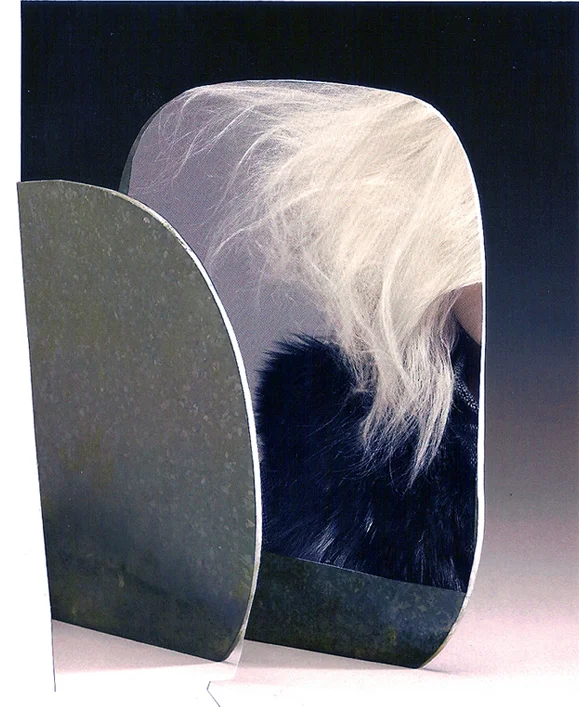
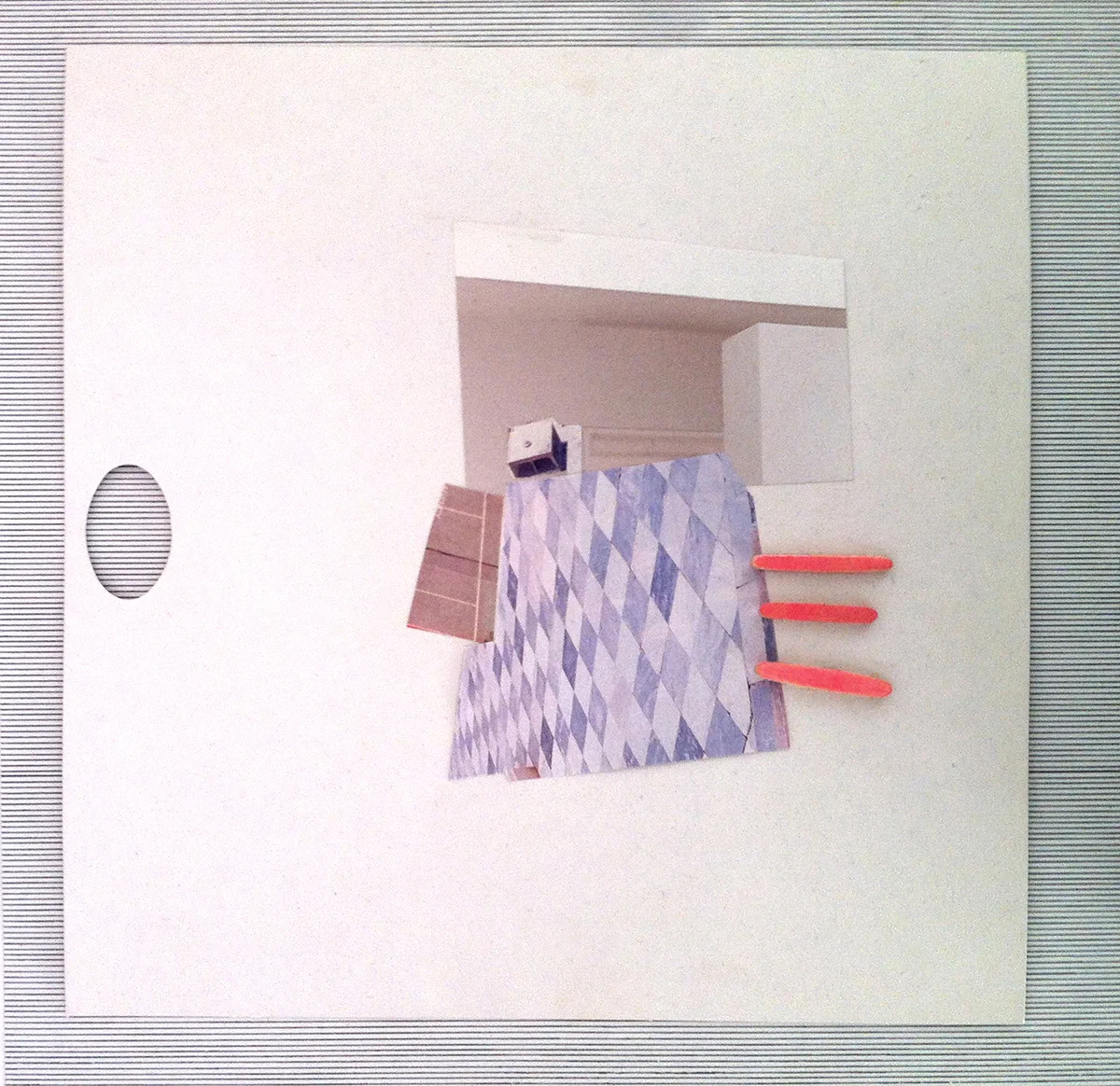
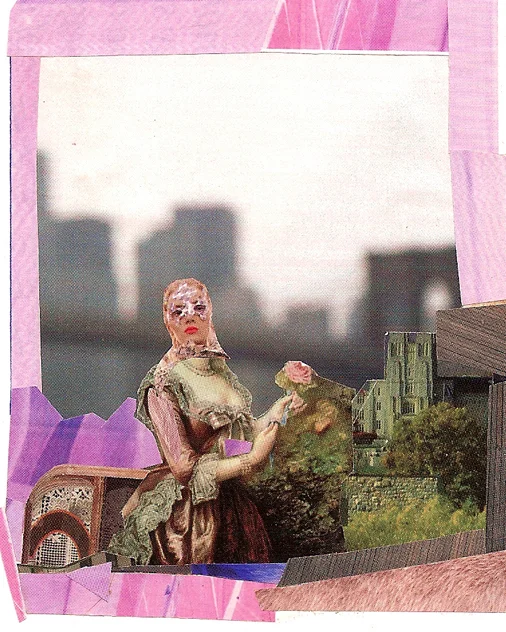
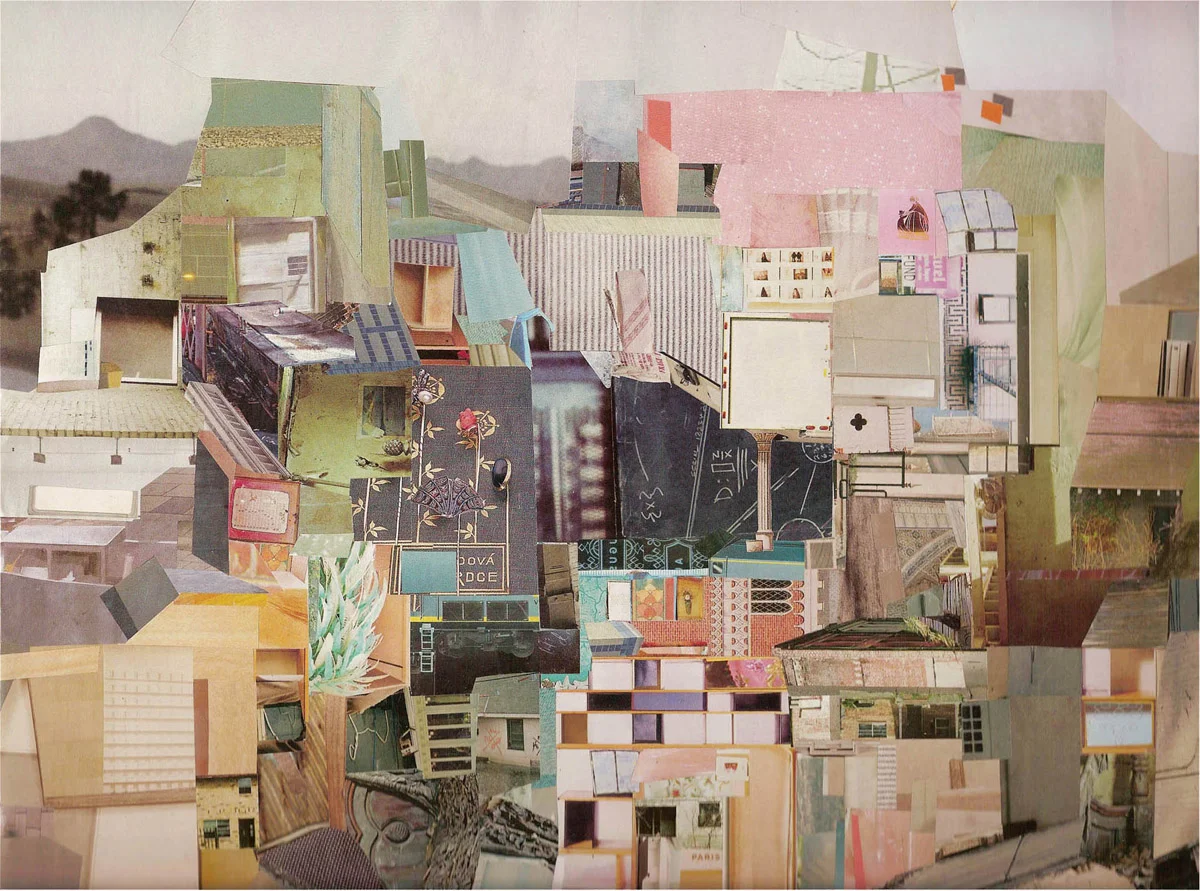
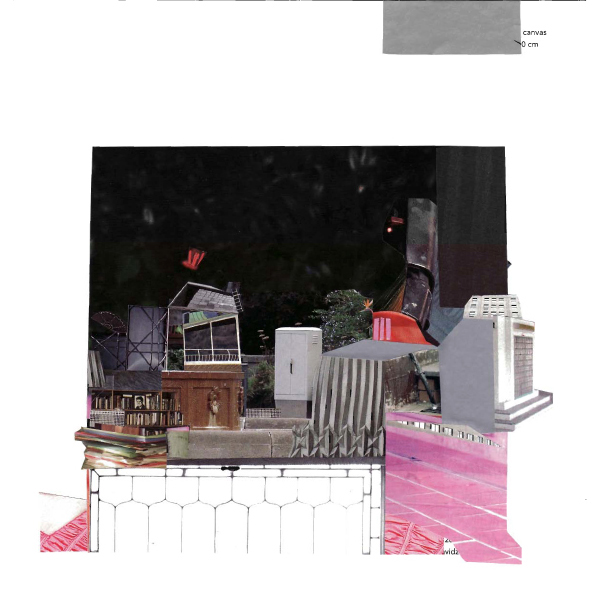
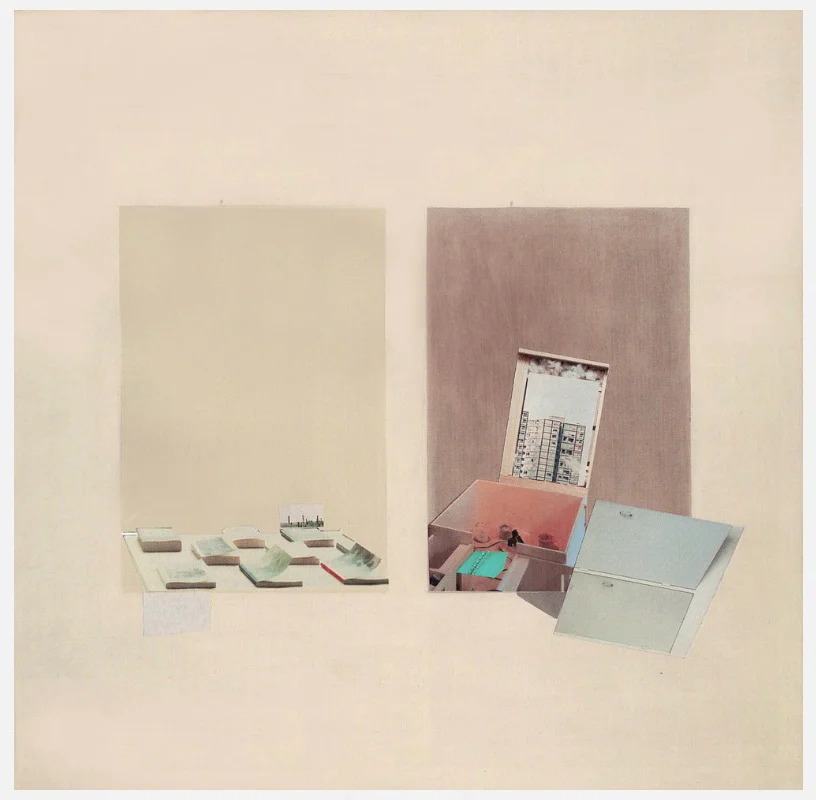
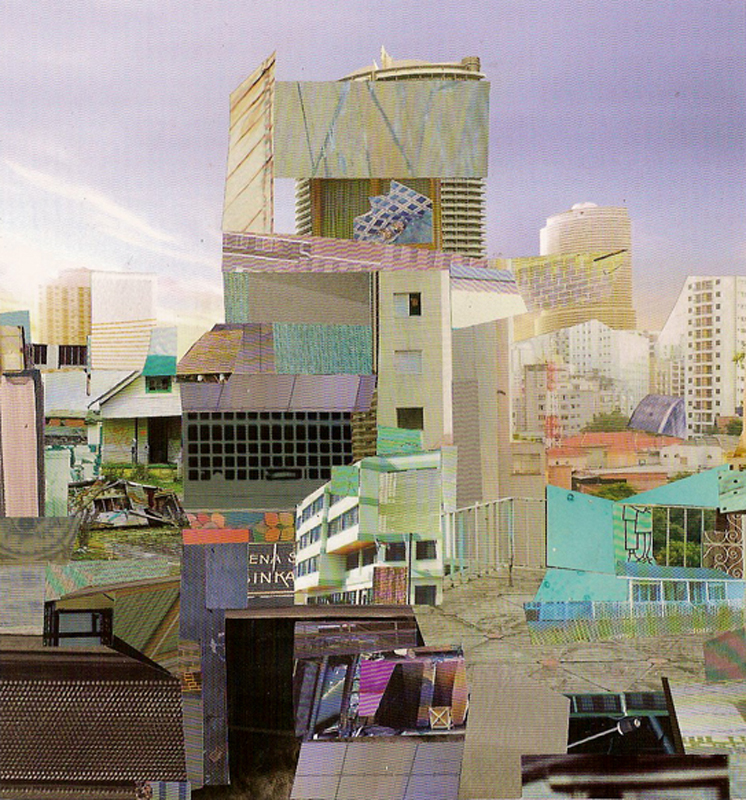
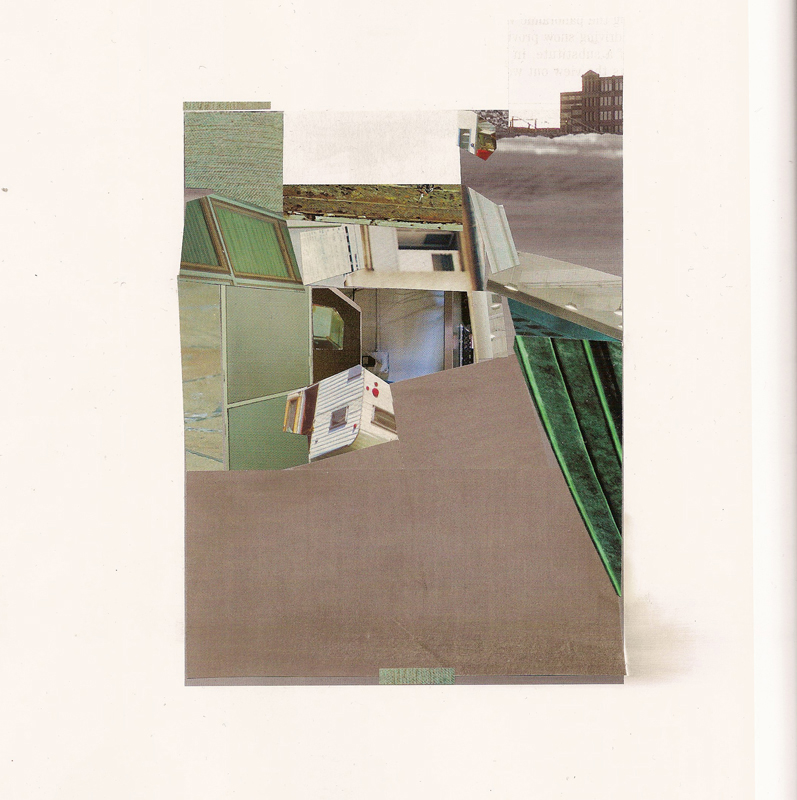
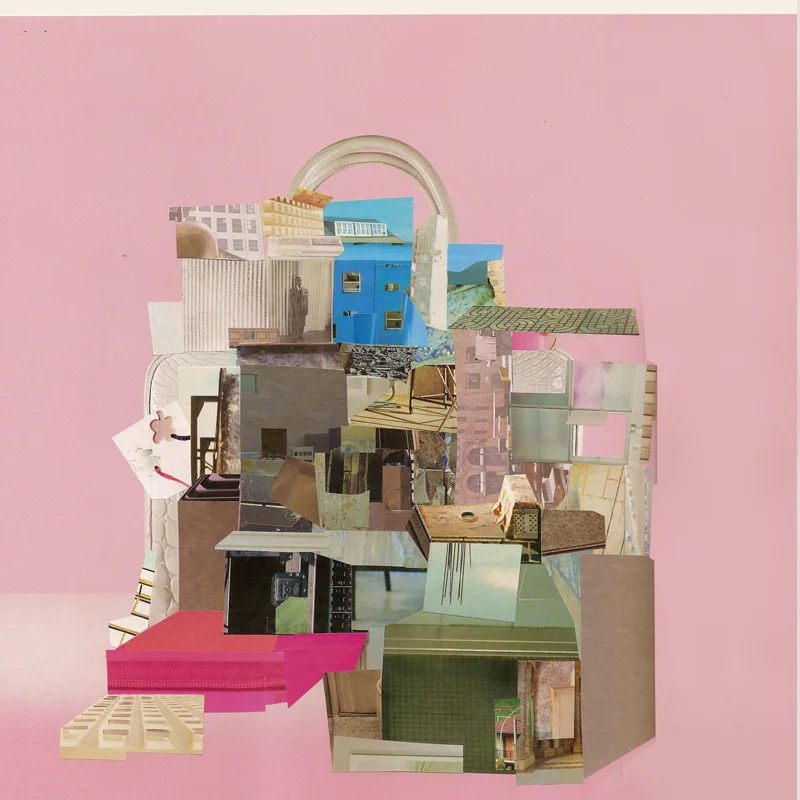
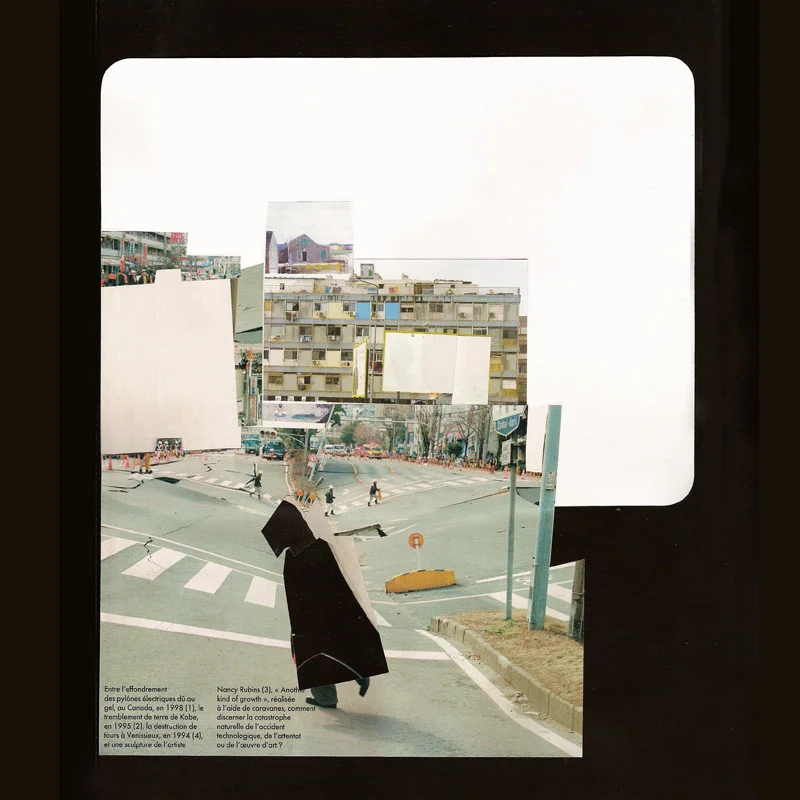
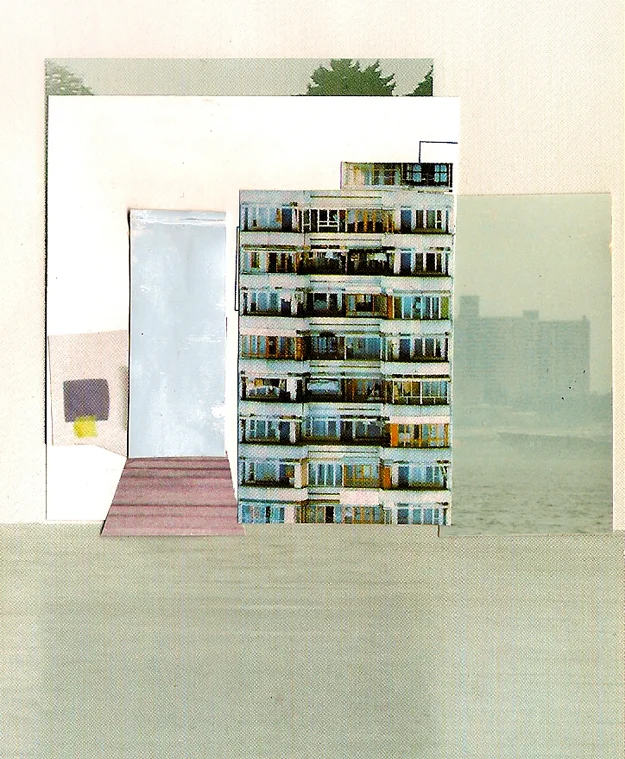
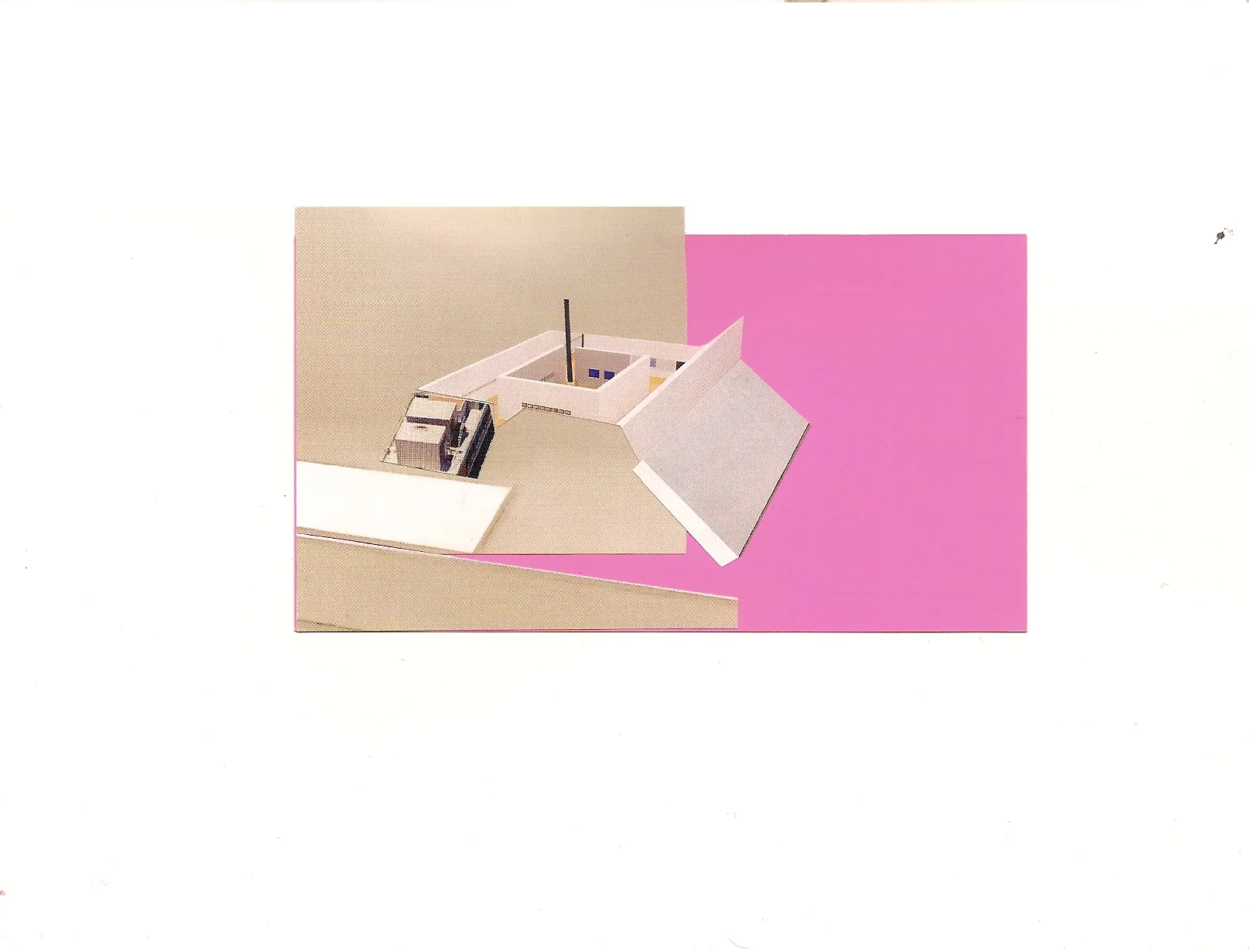
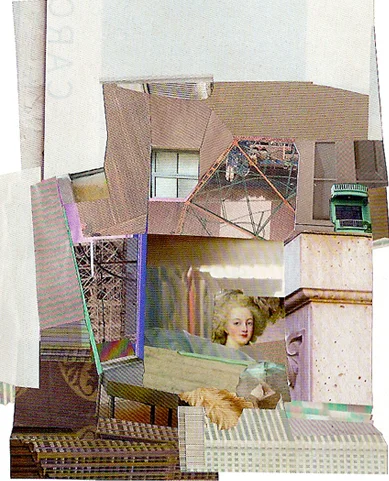
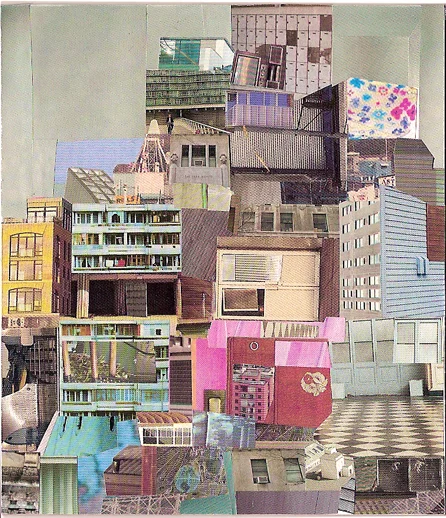
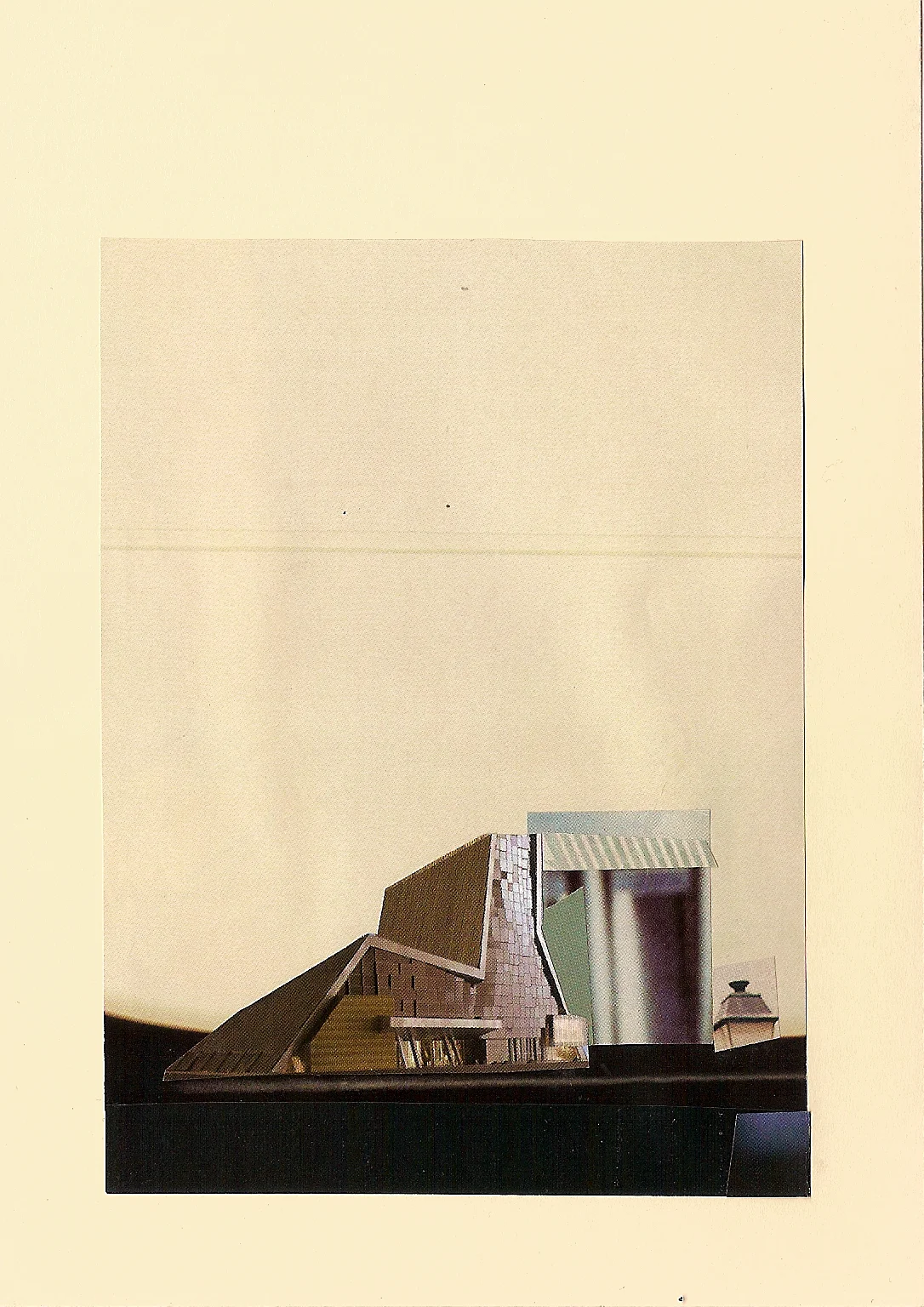
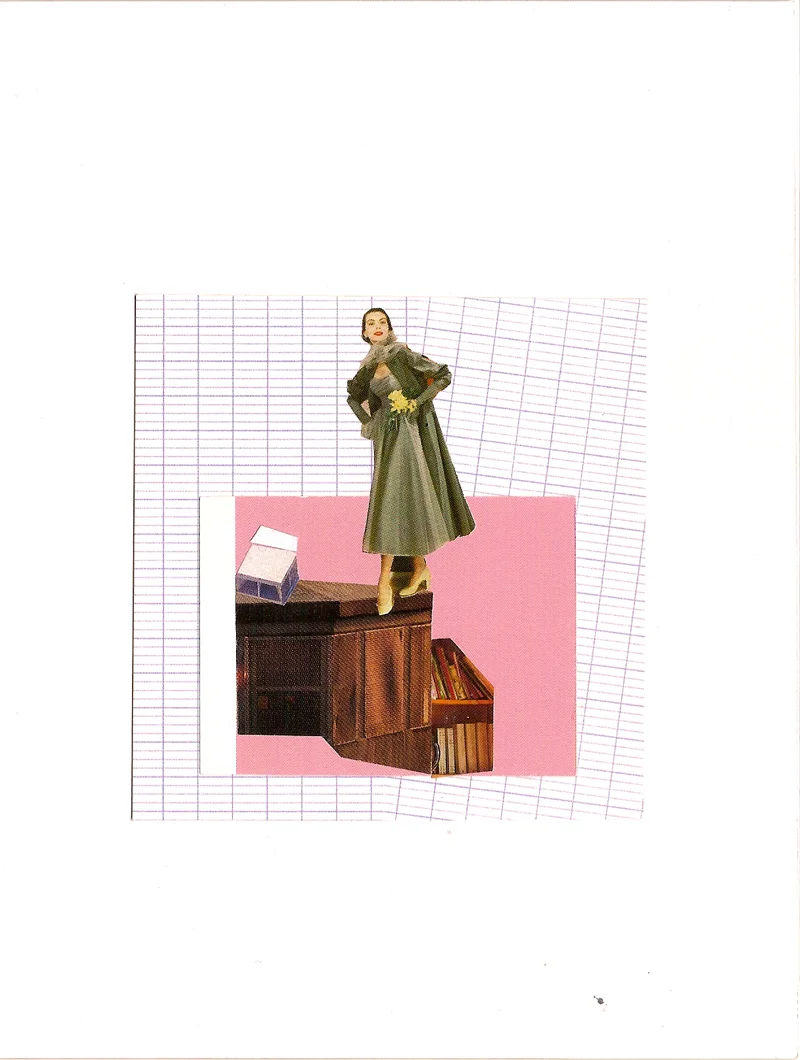
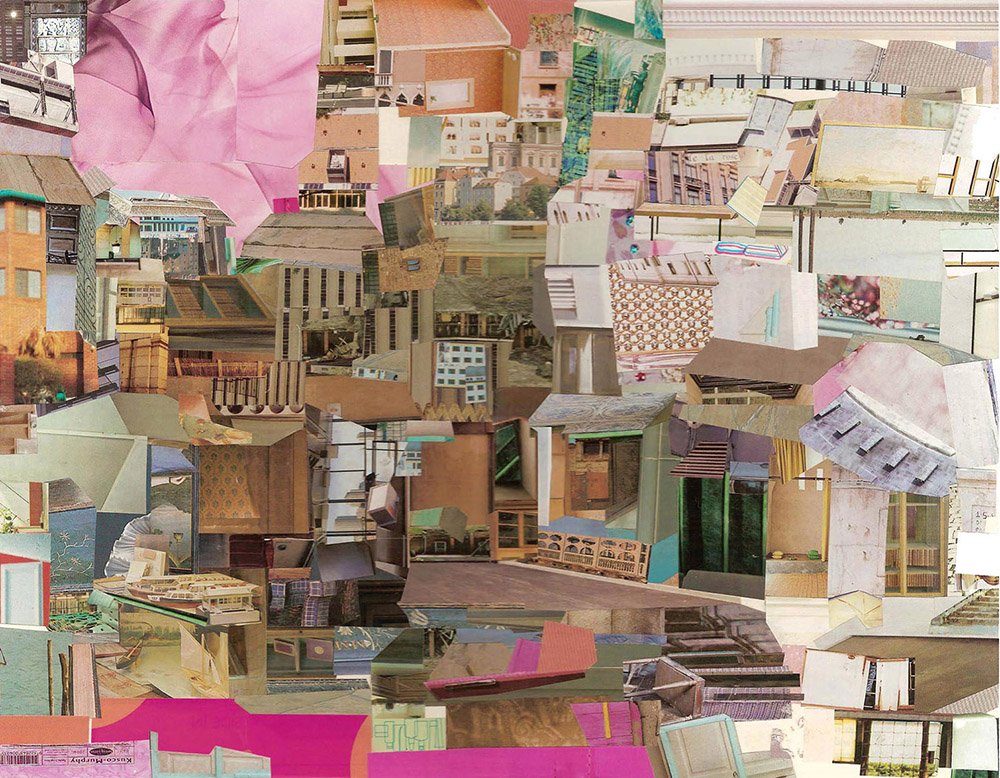
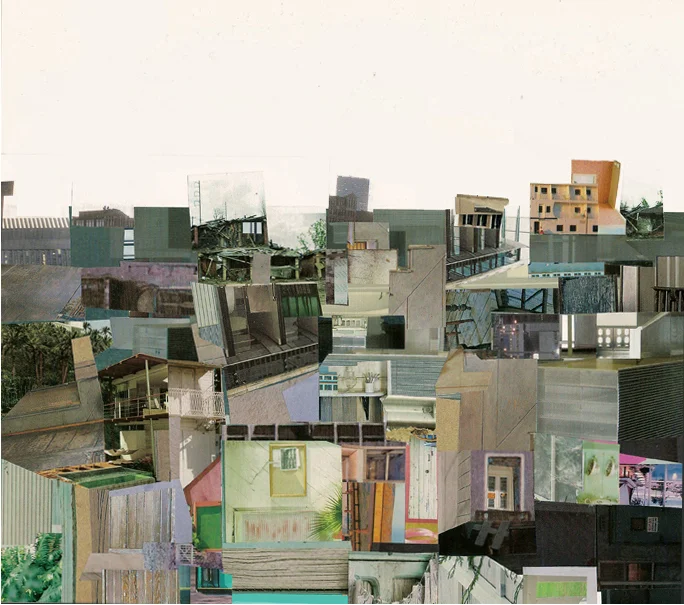
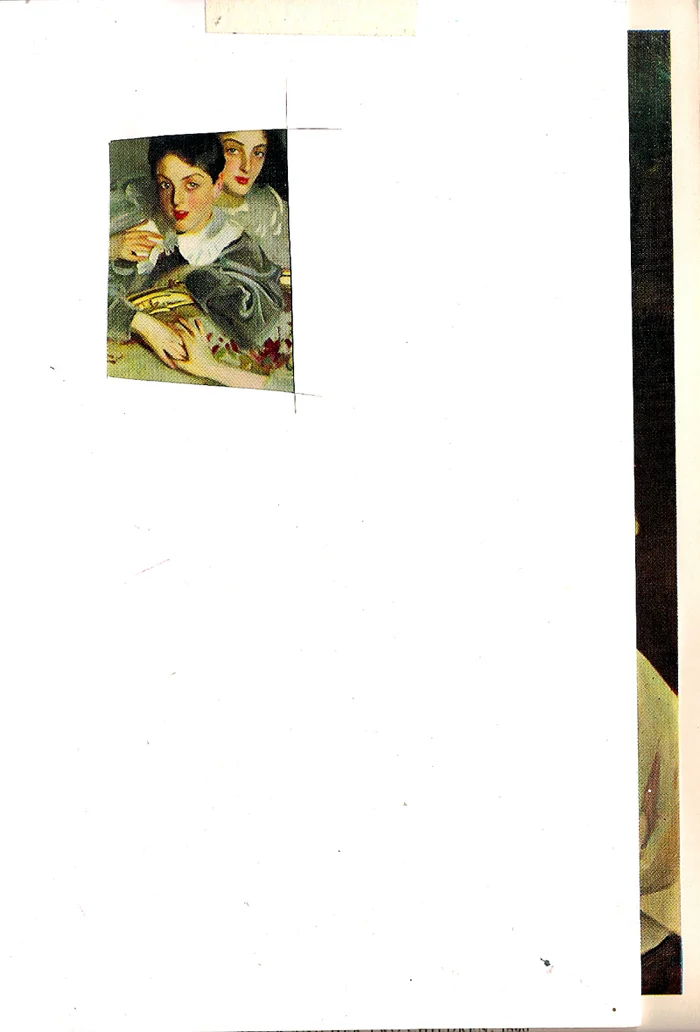
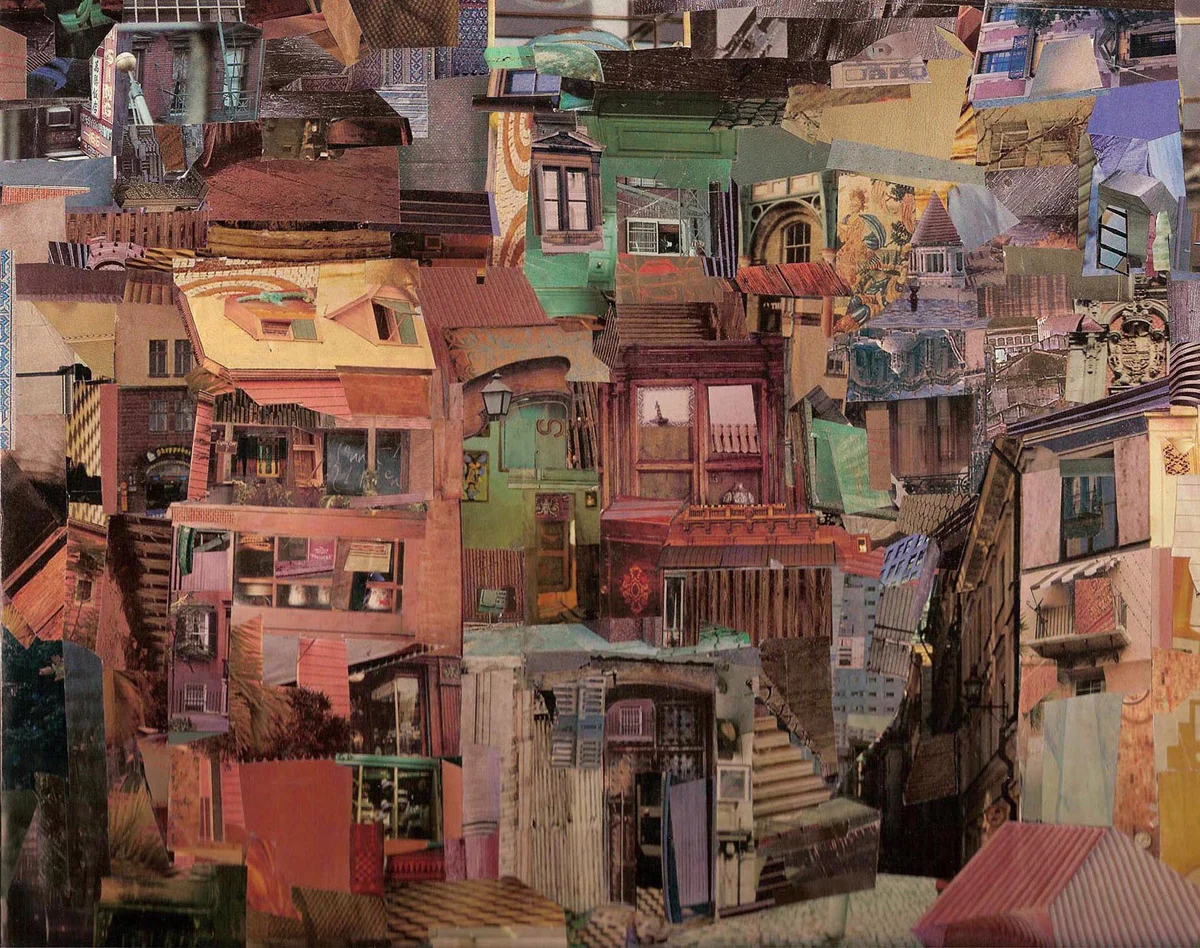
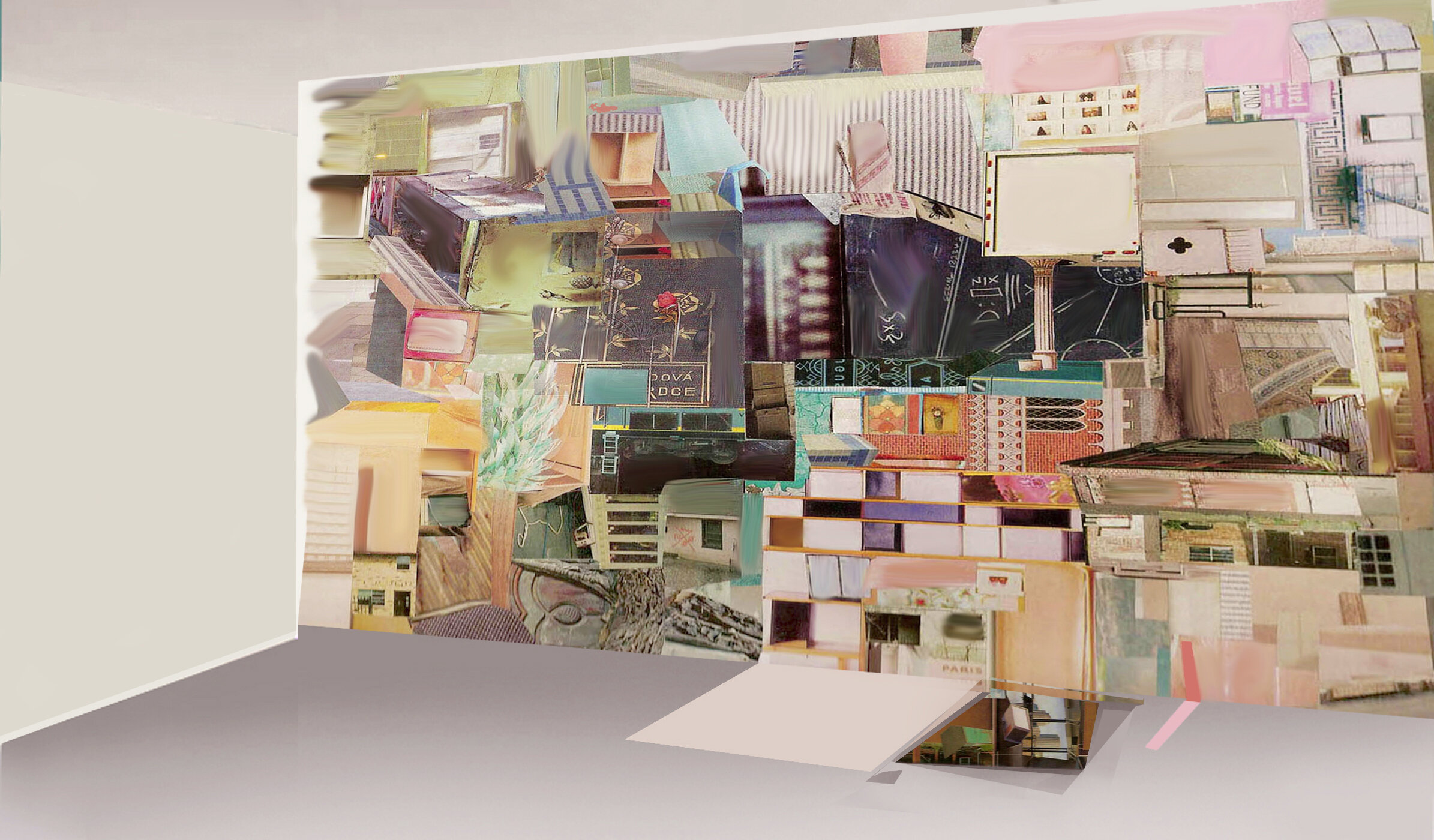
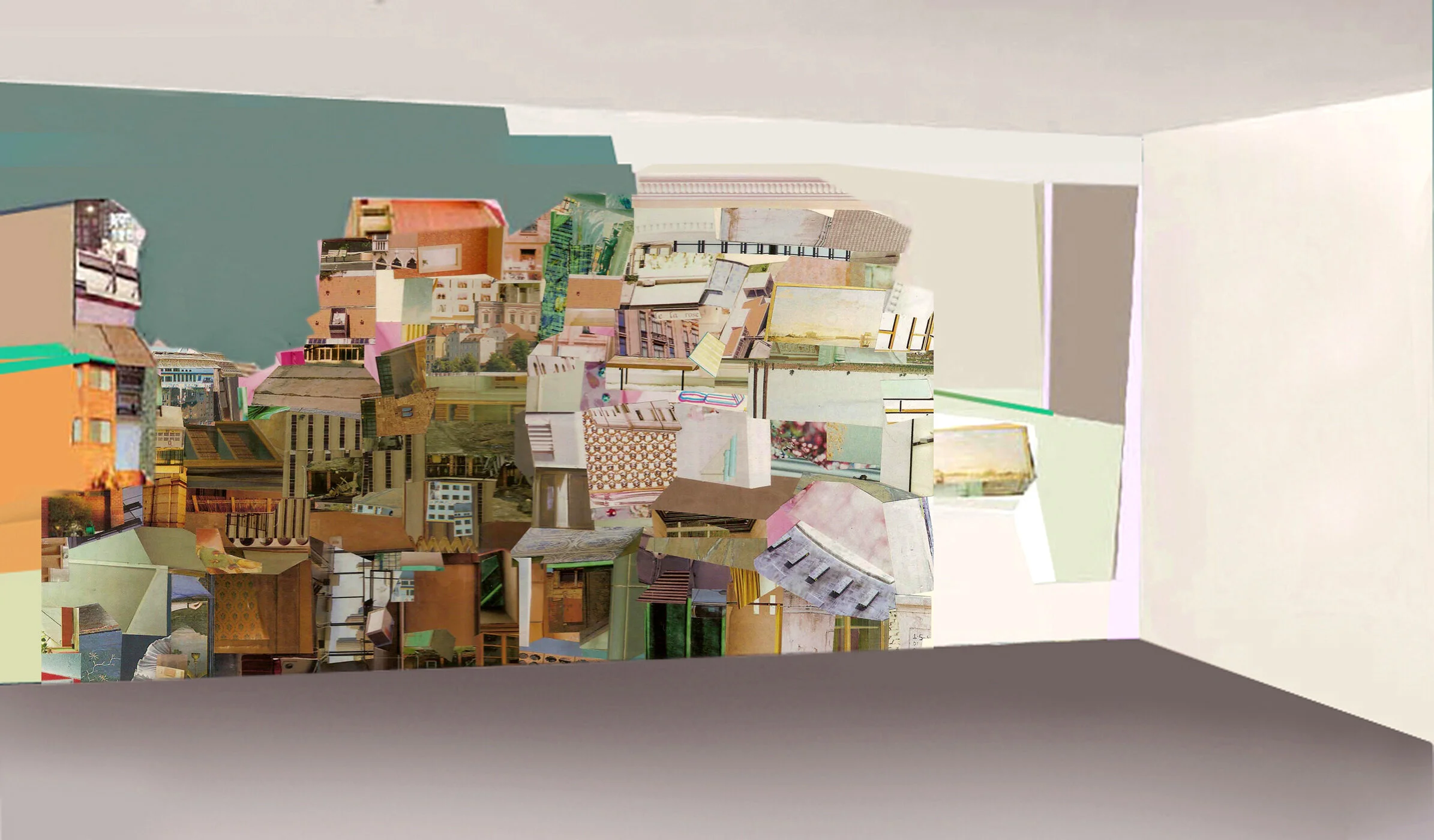
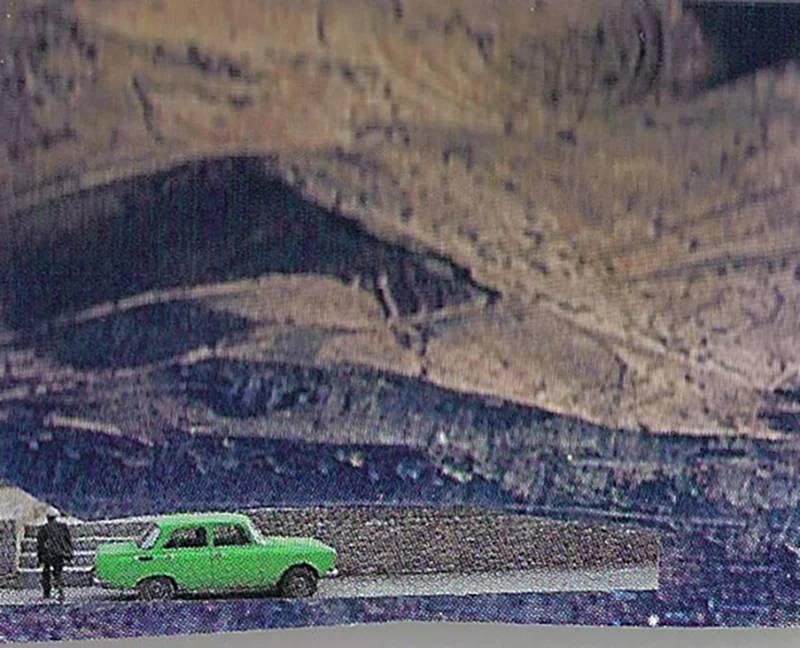
I have a collage-work practice, where I use tiny-tiny cutout pieces of magazine paper as a starting point and set out to explore the space of the page. I construct city-like structures to evoke a post-urban geography, that constitute progressions. Also, I zoom into and map-out of, the origins or details from some of my net-like non-hierarchical structures and translate them into other languages like painting and shift to other scale relationships, like the space of the wall and the room
When I collage, I experience the square inch and a sense of ever-expansion with it. A myriad variant of possible pathways open in an inside-out process, where one primary structure, informs, leads and supports the next. Architectural elements request from adjacent elements to convey space. I am interested in scale shifts and how some times one can be too big or too small for the room in a map of what the net may look like. Inverse to being a cloud or poetic vacuum, the web holds conglomerates of information on very close quarters, where a multiplicity of compartmentalized realities co-exist well beyond the grid and linear rationale.
As I work out the images, I look for spaces, alternatives to experiencing given regimes of architectural competition, of gendered space. I recombine fragments to break apart spatial hierarchies and give a sense of scale for the landscape of lived relations that are not normally visible. As I delve into details from these mannered works, I explore forms of energy transmission in our analogue reality.
There is a strong correlation between a felt illusion of space in the web and the labyrinthine peripheries of the peri-urban slum I saw growing up in Caracas, Venezuela. They both signal diffuse urbanism and present us with very distinct aspects of human social organization in relation to a landscape, where fragments work with landscape as oppose to against it.
Pilita Garcia E.